
The Art of Compression
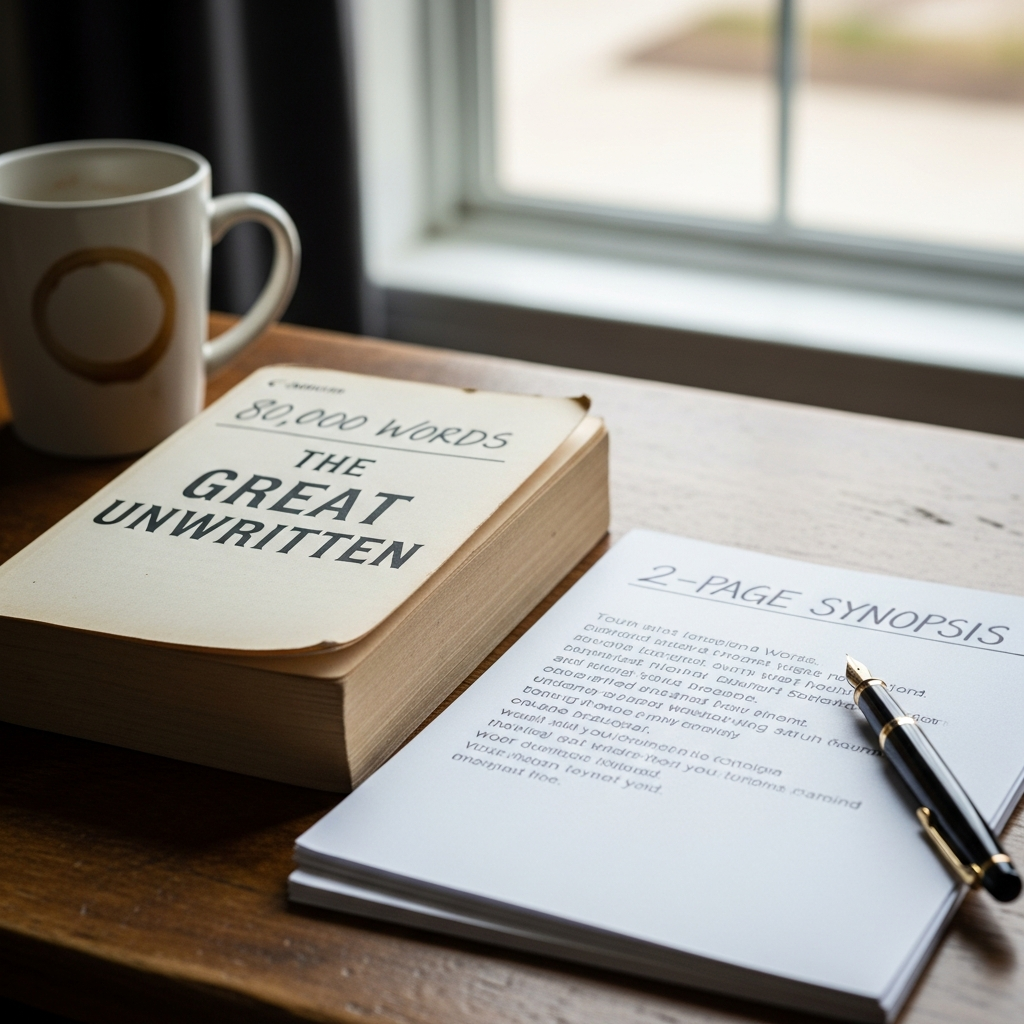
You’ve spent years writing an 80,000-word novel. Now someone wants it in 500 words—including the ending. Welcome to synopsis writing: the most dreaded task in publishing.
What a Synopsis Does
Unlike a query (which teases), a synopsis tells the whole story. Its purpose: demonstrate your plot makes sense, your character has an arc, and you know how to structure narrative. Agents use it to evaluate story competence before reading full manuscripts.
Standard Formats
One-page (500-600 words): Main plot and protagonist only. No subplots.
Two-page (1,000-1,200 words): Room for key secondary characters and essential subplots.
Always check guidelines. When in doubt, shorter.
The Formula
Opening (1-2 paragraphs): Who’s your protagonist? What do they want? What’s wrong with their life?
Inciting Incident (1 paragraph): What event launches the story?
Rising Action (2-3 paragraphs): Major developments, obstacles, complications. Focus on cause and effect: this happens, so protagonist does this, which causes that.
Climax (1 paragraph): The confrontation. The final choice.
Resolution (1-2 sentences): How it ends. What’s changed. Don’t be coy—include the ending.
Include
- Main character’s arc (how they change)
- Key plot points (inciting incident, turning points, climax)
- Stakes (what protagonist stands to lose)
- Cause and effect (why one thing leads to another)
Leave Out
- Subplots (unless essential to main plot)
- Minor characters (use 3-4 named characters maximum)
- Theme statements (“This is a story about…”)
- Scene-by-scene description
- Dialogue (summarize, don’t quote)
Style Rules
Present tense: “Maya discovers” not “Maya discovered.”
Third person: Even if novel is first person.
Names in CAPS: First introduction only.
Action verbs: “Maya investigates” not “Maya begins to look into.”
Emotional stakes: Include how protagonist feels, not just what happens.
Common Mistakes
Too much detail: Hit major beats. Trust the manuscript for nuance.
Cliffhanger ending: “Can Maya save her sister?” Tell them whether she does. Synopses require endings.
Vague abstractions: “Maya learns about trust.” What specifically? Be concrete.
The Necessary Evil
No writer loves synopsis writing. The compression feels brutal. But a well-crafted synopsis shows you can tell a complete, coherent story. It’s the price of admission—pay it well, and your actual writing gets the chance to speak for itself.




Stay in the loop
Get the latest the writers workshop updates delivered to your inbox.